Anuradhapura
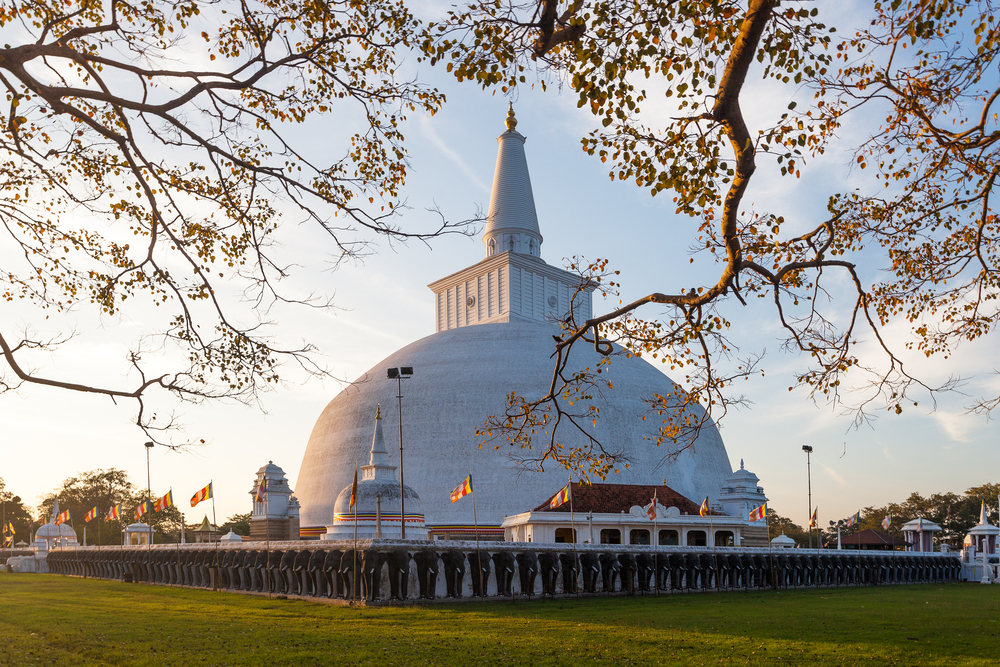
Anuradhapura, Sri Lanka’s first ancient capital, spans centuries of Buddhist civilisation across a vast UNESCO-listed sacred city. Towering dagobas, the sacred Sri Maha Bodhi tree, and intricate moonstone carvings speak to a golden age of engineering and devotion, making it one of Asia’s most significant archaeological and spiritual sites.
Yapahuwa
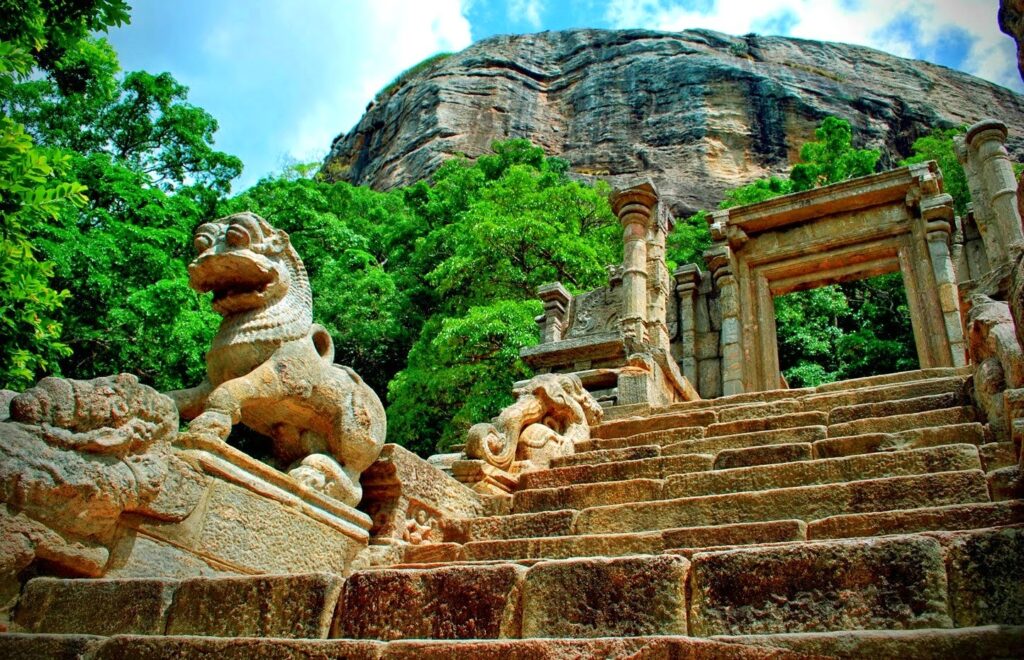
Yapahuwa is a lesser-visited fortress-rock that briefly served as Sri Lanka’s capital in the 13th century, with its dramatic ornamental stairway leading to a ruined palace complex above. Far quieter than the island’s more famous sites, it rewards travellers with solitude, atmospheric ruins and sweeping views over the surrounding plains.
Dambulla Cave Temple
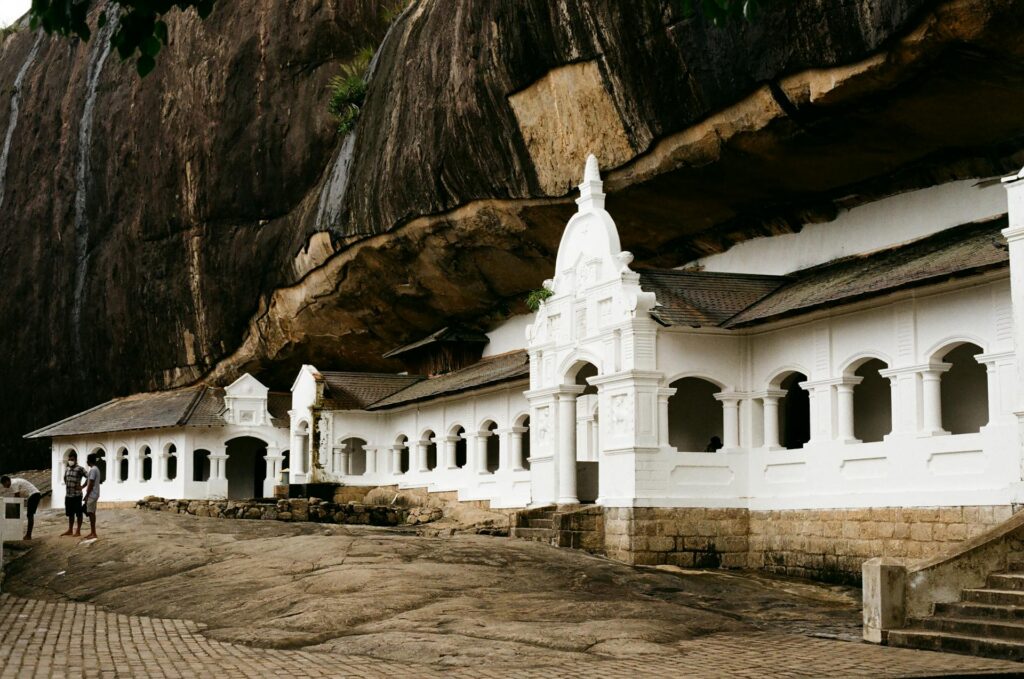
Carved into a granite outcrop over two millennia ago, the Dambulla Cave Temple houses five sacred caves filled with over 150 Buddha statues and vivid ceiling murals. As Sri Lanka’s largest and best-preserved cave temple complex, it remains an active site of Buddhist worship and a masterpiece of ancient artistry.
Sigiriya
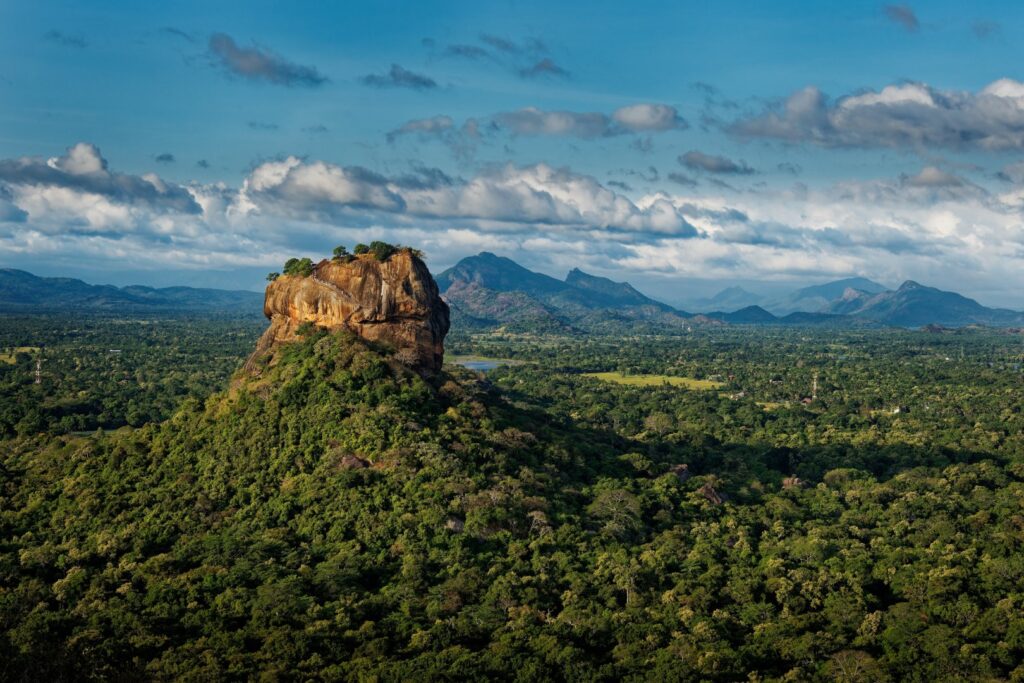
Sigiriya’s Lion Rock rises dramatically from the jungle plains, its summit crowned by the ruins of a 5th-century royal palace. Climbing past ancient frescoes and the roaring lion’s paws carved into the rock face rewards visitors with sweeping panoramic views. As a UNESCO World Heritage Site, it remains Sri Lanka’s most iconic landmark.
Polonnaruwa
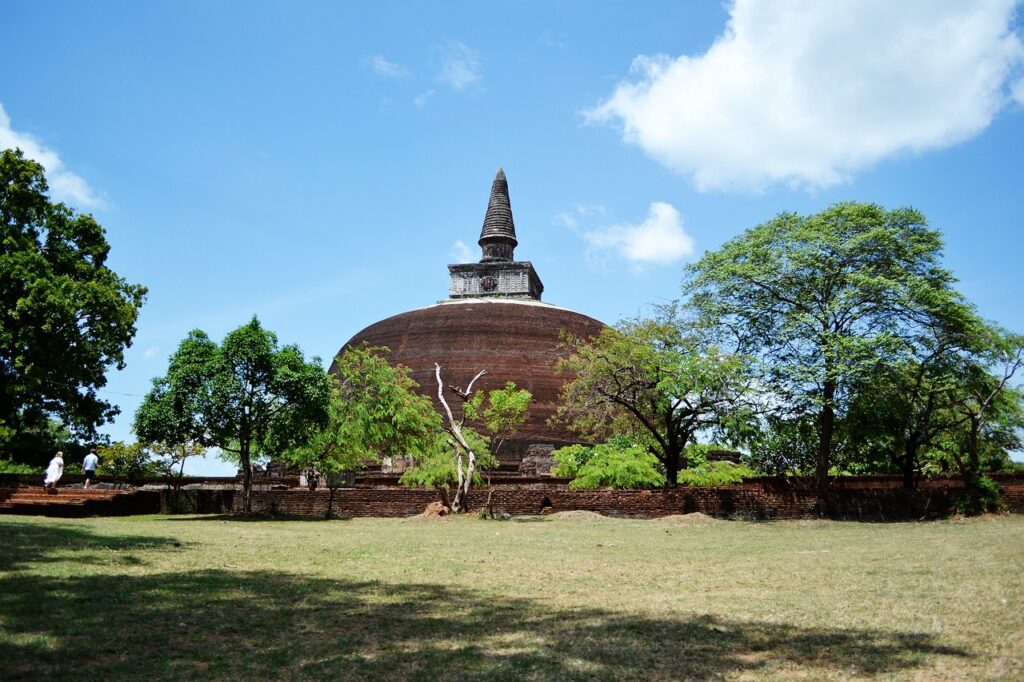
Polonnaruwa is a preserved UNESCO World Heritage city of stone palaces, moated temples and the monumental Gal Vihara Buddha statues carved directly into rock. Cycling between ruins beneath shady trees, with monkeys and monitor lizards for company, makes exploring this 12th-century royal city feel unhurried and intimate.